
Commercial Window Tinting in Atlanta for Energy Savings, Privacy and Security

Commercial glass looks clean, open, and high value. In Atlanta’s summer heat, it can also become a direct source of higher cooling demand, tenant discomfort, product fading, glare complaints, and exposed interiors.
For properties across Fulton, Cobb, Gwinnett, Buckhead, Sandy Springs, and the broader Metro Atlanta area, window film is often one of the most practical upgrades available because it works with the glass already in place. The right architectural film can reduce solar heat, block UV exposure, improve privacy, control glare, and add a layer of glass hazard protection without changing the building envelope.
That is the core value of commercial window tinting Atlanta property teams should be evaluating: not appearance alone, but measurable performance at the glass.
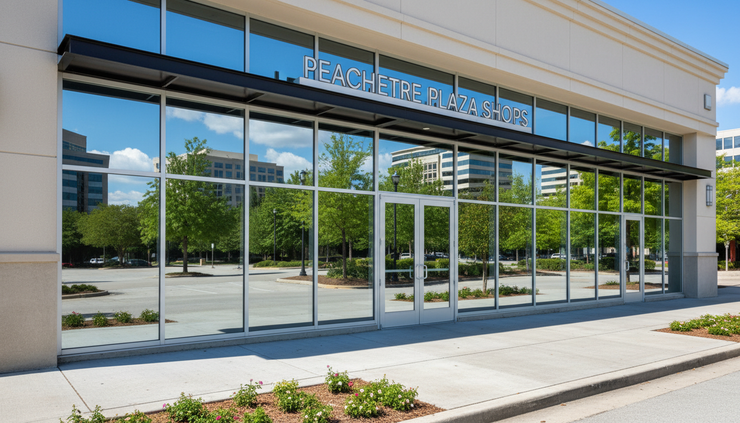
Atlanta commercial buildings need more than basic glare control
Metro Atlanta buildings deal with long cooling seasons, intense afternoon sun, and tenant spaces with different comfort needs. A retail storefront in Cobb County may need product protection and after-hours security. A medical office in Fulton County may need privacy without making rooms feel closed off. An executive suite in Buckhead may need glare reduction that still meets lease or design standards.
Standard glass does not solve those problems on its own.
Untreated commercial glass allows a significant amount of solar energy into the space. That heat gain can force HVAC systems to run longer, especially in perimeter zones with large window exposure. At the same time, UV rays can fade merchandise, flooring, wall coverings, furniture, and display materials.
The right film specification depends on the building, glass type, tenant use, and performance target. A professional evaluation should look at:
Glass orientation and sun exposure
Existing glass type and condition
Tenant comfort complaints
HVAC zoning and hot spots
Interior visibility needs
Lease or property appearance requirements
Security concerns at doors, sidelites, and storefront glass
A film that works well for a street-facing retail bay may not be right for a medical corridor or a lobby partition. Architectural film selection is a technical decision, not a one-product solution.
Solar control film can cut heat gain and reduce cooling pressure
Commercial solar control film is designed to reject heat before it becomes an HVAC load. Depending on the selected product and glass system, quality films can reject up to 80% or more of solar heat and block up to 99% of UV rays.
For Atlanta properties, that matters because cooling costs are not driven only by the thermostat setting. They are also driven by solar heat gain through glass, especially on south and west elevations.
When untreated glass absorbs and transmits heat, the building can develop uneven temperature zones. One tenant may be cold in the interior while another overheats near the windows. Multi-zone HVAC systems then work harder to balance comfort across the space.
A properly selected solar film can help:
Lower heat gain through exposed glass
Reduce hot spots near windows
Support more stable perimeter temperatures
Reduce glare on screens and displays
Protect inventory and finishes from UV exposure
Help reduce business energy costs Atlanta property operators monitor each summer
For retail environments, the UV benefit is especially important. Apparel, packaged goods, signage, flooring, millwork, and display fixtures can fade under repeated sun exposure. Film will not stop all fading because heat, visible light, and material chemistry also play a role, but UV rejection removes one major contributor.
For office suites, clinics, banks, restaurants, and tenant buildouts, commercial solar control film Georgia properties use most often must balance heat rejection with visible light. Darker is not always better. The best specification is the one that meets performance goals while preserving safety, visibility, and the property’s exterior standards.
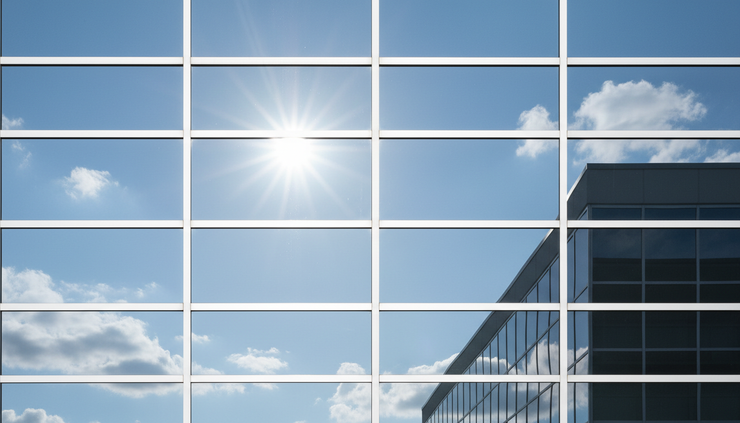
Dual-reflective films help balance daytime privacy and night views
Dual-reflective films are a strong fit for many commercial spaces because they solve a common problem with reflective glass treatments.
The exterior side has a higher reflective appearance, which helps reject solar heat and creates crisp daytime one-way privacy. The interior side has lower reflection, which helps preserve clearer views after dark.
That difference matters in real-world buildings.
With some reflective products, occupants may see too much interior reflection at night when the lights are on. Dual-reflective film reduces that mirror effect from inside the space, so tenants can still look out more clearly after sunset.
Dual-reflective films are often used for:
Street-level storefronts that need daytime privacy
Tenant spaces with high sun exposure
Fitness centers and wellness studios
Restaurants with perimeter seating
Showrooms with merchandise near glass
Lobby areas where heat and visibility both matter
Daytime privacy does depend on lighting conditions. One-way privacy works best when the outside is brighter than the inside. At night, interior lighting can reduce privacy unless blinds, shades, or interior lighting controls are used. A professional installer should explain that clearly during product selection.
For storefront window tinting Metro Atlanta businesses often need film that performs without making the property look sealed off. Dual-reflective products can provide the heat rejection and daytime privacy many tenants want while keeping the view functional from inside.
Frosted and decorative films provide full privacy without blocking daylight
Privacy does not always require dark glass. In fact, dark tint can be the wrong choice for many commercial interiors.
Frosted and decorative films are designed for 100% two-way privacy while still allowing soft, diffuse daylight through the glass. Many frosted films transmit 70% or more visible light, depending on the pattern and product line.
That makes them useful where visual separation matters but daylight still improves the space.
Common applications include:
Medical suites and exam room glass
Glass partitions in tenant buildouts
Reception sidelites
Interior doors
Shared corridors
Wellness and therapy spaces
Banks and service counters
Restroom vestibules and changing areas
Office privacy window tint is often specified for interior glass because it can meet privacy needs without replacing clear panels. Frosted film can be full coverage, patterned, banded, or custom cut to match a specific design intent.
For general contractors and tenant improvement teams, decorative film is also useful because installation is usually faster and less disruptive than ordering specialty glass. It can support privacy requirements late in a project without changing door hardware, frames, or glass dimensions.
Frosted film also helps reduce visible clutter. A hallway lined with clear glass partitions can expose supplies, equipment, or patient areas. A soft privacy film creates separation while keeping the space bright.

Neutral and black films meet conservative property standards
Not every building can use a reflective film. Some properties have lease covenants, design standards, or landlord requirements that limit exterior reflectivity.
Traditional black and neutral films provide a more understated finish. They reduce glare and heat while keeping a non-mirrored exterior appearance. These films are often selected when the property needs performance without changing the visual character of the facade.
Neutral films are a good fit for:
Multi-tenant commercial centers
Medical buildings
Executive suites
Ground-floor service businesses
Restaurants with shaded glass
Properties with strict exterior design rules
The key is choosing a visible light transmission level that supports the space. A film that is too dark can make a storefront less inviting and may reduce nighttime visibility for staff or security patrols. A film that is too light may not solve glare or comfort issues.
This is where field experience matters. A sample placed on the actual glass, on the actual elevation, tells more than a brochure. Sun angle, interior lighting, landscaping, overhangs, and surrounding buildings all affect how film appears during the day and after dark.
For commercial property managers, this step helps avoid tenant complaints and lease disputes. For business owners, it helps maintain storefront presentation while still addressing heat and glare.
Security film adds a defensive layer at vulnerable glass
Glass is often the weakest point in a storefront or commercial entrance. Doors, sidelites, display windows, and low-level panes can be targeted during smash-and-grab attempts or damaged by severe Georgia storms.
Commercial security window film is built differently from standard solar film. Thicker products, commonly 8 mil or greater, are designed to hold broken glass together after impact. When paired with the correct attachment system, security film can make forced entry more difficult and help keep shattered glass from spreading into the interior.
That distinction is important. Security film does not make glass unbreakable. It does not replace alarms, locks, laminated glass, shutters, or access control. Its role is to help the glazing system stay together longer after impact.
That extra time can matter. During an attempted break-in, a delayed entry can increase the chance that an intruder leaves before gaining access. During storm damage, retained glass fragments can reduce cleanup hazards and help protect the interior.
Security film is commonly recommended for:
Retail storefronts with exposed merchandise
Pharmacies and medical facilities
Schools and training centers
Ground-floor tenant spaces
Restaurants and bars with street-facing glass
Commercial doors and sidelites
Properties with prior glass breakage events
For higher-risk openings, film thickness and attachment method should be specified together. A thick film installed without the right edge attachment may not perform as intended. Professional installation and product matching are necessary for the system to do its job.
The right specification starts with the building
A successful film project starts with the question, “What problem is this glass creating?”
For one property, the priority may be cooling load on a west-facing elevation. For another, it may be tenant privacy in a medical suite. For a retail operator, the main concern may be break-in delay at the storefront. The film schedule should reflect those differences.
A site evaluation should include:
Evaluation area | Why it matters |
Glass type | Some films are not appropriate for certain glass units, especially where heat absorption could create stress risk. |
Sun exposure | South and west elevations often need stronger solar control than shaded glass. |
Interior use | Retail, medical, restaurant, and tenant spaces each have different privacy and visibility needs. |
Exterior appearance | Property standards may limit reflectivity, darkness, or color. |
Security goals | Threat level affects film thickness, attachment options, and scope. |
Installation timing | Occupied spaces, tenant buildouts, and active storefronts need planned scheduling. |
Professional film selection also helps protect warranties and reduce risk. Architectural film should be matched to the glass system, installed under the right conditions, and finished with clean edges. Commercial work requires consistency across large panes, public-facing glass, and occupied spaces.
UniCres Tints, based in Union City, provides commercial film consultation and installation across Metro Atlanta, including Atlanta, Sandy Springs, Buckhead, Fulton County, Cobb County, and nearby business districts. For a broader overview of film options, visit Learn More About Tinting. To review a property, storefront, or tenant buildout, schedule a commercial site evaluation.

FAQ
How much heat can commercial window film reject?
Some commercial solar control films can reject up to 80% or more of solar heat, depending on the product and glass type. The exact result depends on the film selected, the glass system, the elevation, and sun exposure.
Does window film block UV rays that fade merchandise?
Many quality architectural films block up to 99% of UV rays. This can help reduce fading of merchandise, flooring, furnishings, and interior finishes. Fading can still occur from heat, visible light, and material aging, so film reduces risk rather than eliminating it entirely.
Can window film provide privacy during the day and visibility at night?
Dual-reflective films can provide strong daytime privacy when outdoor light is brighter than interior light. Their lower interior reflection also helps improve night views from inside. At night, privacy may decrease if interior lights are on and the exterior is dark.
Is frosted film better than dark tint for medical or interior privacy?
For many interior privacy needs, yes. Frosted film provides two-way privacy while still allowing soft daylight through the glass. It is often better suited for medical suites, glass partitions, and shared corridors than a dark film.
Does security film stop break-ins?
Security film does not make glass unbreakable. It helps hold shattered glass together after impact and can delay entry when properly specified and installed. For higher-risk properties, it should be part of a broader security plan.
A practical upgrade for energy, privacy, and risk control
Commercial window film works best when it is treated as a building performance product, not a cosmetic add-on. Solar control films can reduce heat gain and UV exposure. Dual-reflective films can balance privacy with clear views. Frosted films can protect sensitive spaces while preserving daylight. Neutral films can reduce glare without changing a property’s exterior character. Security films can help hold damaged glass together during impact events.
For Atlanta-area commercial properties, the right film can reduce overhead, improve tenant comfort, protect interiors, and add a measured layer of defense at vulnerable glass. The best next step is a site-specific assessment that matches the film to the glass, the exposure, and the way the space is used.


Comments