
Mobile Tint Services That Save Time at Your Home or Office

A window tint appointment should not take over your day. For many people, the hardest part is not choosing the film, it is finding time to drive across town, wait around, and rearrange everything else on the calendar.
That is where mobile tinting earns its value. Instead of bringing a vehicle, window screen, or glass panel to a shop, a trained installer brings the tools, film, and setup to you. Tinting can be done at a home, apartment property, storefront, jobsite, or workplace parking area, as long as the space is safe and suitable for the work.
The result is simple: less travel, less waiting, and a more practical way to improve comfort, privacy, and appearance.
Why mobile tinting is so convenient
Mobile tint services are built around one idea: the installer travels so the client does not have to.
That matters more than it may seem. Traditional tint appointments often involve driving to a shop, waiting for the work to finish, arranging a ride, or returning later for pickup. For a busy household, property manager, or team at a workplace, those small steps can eat up a morning.
With a mobile appointment, the work fits around the day instead of interrupting it. A vehicle can be tinted while the owner is working. Residential windows can be measured and filmed while someone is home. A commercial space can schedule film installation during slower hours, after-hours access, or a planned maintenance window.
The biggest benefits are easy to understand:
No extra travel
The installer comes to the selected address, which removes the back-and-forth trip.
Less downtime
A car can often stay parked where it already is. A home or office project can move forward without sending anyone off-site.
More flexible scheduling
Mobile teams often serve neighborhoods, workplaces, and properties in routes, which can make scheduling easier.
Better fit for multiple windows or vehicles
If a household has more than one car or a building has several glass areas, mobile service can reduce coordination.
A more comfortable experience
Clients can stay in their own space while the work is handled nearby.
Mobile tinting is especially useful at workplaces. An employee can park in an agreed area, hand over access if needed, and return to a freshly tinted vehicle later. For business properties, the same idea applies to flat glass. Tint can be installed on conference rooms, entry glass, storefront panes, break areas, and sun-facing windows without taking the entire day off track.
What mobile tint services can include
Tinting is not one single product. Different films solve different problems, and mobile installers often carry several options or bring selected materials based on the project request.
Automotive window tinting
Automotive tint is one of the most common mobile services. It can improve the look of a vehicle, reduce glare, add privacy, and help the interior feel more comfortable in direct sun.
A mobile automotive tint appointment may include:
Side window tint
Rear windshield tint
Front visor strips where allowed
Removal of old, bubbling, or faded film
Ceramic, carbon, dyed, or hybrid film options
Legal shade guidance based on local rules
Film choice matters. Dyed films are often used for appearance and privacy. Carbon films tend to offer better durability and heat control. Ceramic films are popular for strong performance without adding a dark, reflective look. The installer can explain what each option does and what is allowed where the vehicle is registered.
Residential window tinting
Home tinting is a practical choice for rooms that get harsh sun, glare on screens, or uncomfortable heat at certain times of day. It can also help protect floors, furniture, and artwork from fading caused by long-term sun exposure.
Common home tint projects include:
Large living room windows
Sliding glass doors
Bedroom windows
Bathroom privacy glass
Skylights
Sun-facing upstairs rooms
Residential films range from nearly clear solar control film to frosted privacy film. Decorative patterns can also be used on bathroom glass, entryway sidelights, or interior glass panels.
Commercial and workplace tinting
For offices, shops, studios, clinics, and shared work areas, tint can make glass more useful. It can reduce glare, improve comfort near windows, and create a cleaner, more finished appearance.
Commercial tint services may include:
Solar control film for exterior-facing windows
Frosted film for privacy
Decorative film for interior glass
Safety and security film for added glass strength
Anti-glare film for bright work areas
Film removal and replacement
Workplace tinting is where mobile service is especially helpful. The installer is already coming to the site, so there is no need to remove glass, transport materials, or send staff away from the property.

How the mobile tinting process works
A good mobile tint appointment feels organized from the first conversation. The exact steps vary by project, but most follow a clear process.
The project starts with a quick consultation
The installer first needs to understand the goal. Is the main concern glare, heat, privacy, appearance, fading, or safety? Is the project for a vehicle, home, storefront, or workplace?
For vehicles, the team may ask for the year, make, model, and desired shade. For homes and commercial spaces, they may ask for photos, rough measurements, window locations, and whether the glass gets direct sun.
This step helps the installer recommend the right film and bring the correct materials.
The site is checked before work begins
Once the installer arrives, the space needs to be suitable. Tint work requires clean conditions, safe access, and enough room to work carefully.
For vehicle tinting at a workplace, the best spot is usually a shaded, low-wind area with space around the doors. A garage, covered area, or quiet parking area can work well. For building windows, the installer checks glass type, access, furniture clearance, and nearby surfaces that need protection.
A clean setup makes a big difference. Dust, wind, and moisture can affect installation quality, so professional mobile teams plan around those conditions.
The glass is cleaned and prepared
Preparation is one of the most important parts of tinting. The installer cleans the glass thoroughly, removes residue, and checks for old adhesive, chips, scratches, or contamination.
For vehicles, door panels and seals may need careful handling. For flat glass, surrounding trim and surfaces are protected as needed. If old film is present, the installer may need extra time to remove it without damaging the glass or leaving adhesive behind.
The film is cut, shaped, and installed
Depending on the job, film may be computer-cut before arrival or trimmed on-site. Automotive windows often require heat shaping so the film matches curved glass. Flat glass usually involves measuring, cutting, applying the film, and trimming edges with precision.
The installer applies a mounting solution, positions the film, then uses squeegees to remove liquid and air from beneath the film. The goal is smooth contact, clean edges, and an even finish.
The installer reviews care instructions
Fresh tint needs time to dry and cure. The installer explains what to expect, such as temporary haze, small moisture pockets, or drying patterns that clear as the film settles.
For vehicles, clients are often told not to roll down newly tinted windows for a short period. For home and commercial glass, the installer may provide guidance on cleaning products, cloth types, and when to clean the film for the first time.
Special equipment that makes mobile tinting possible
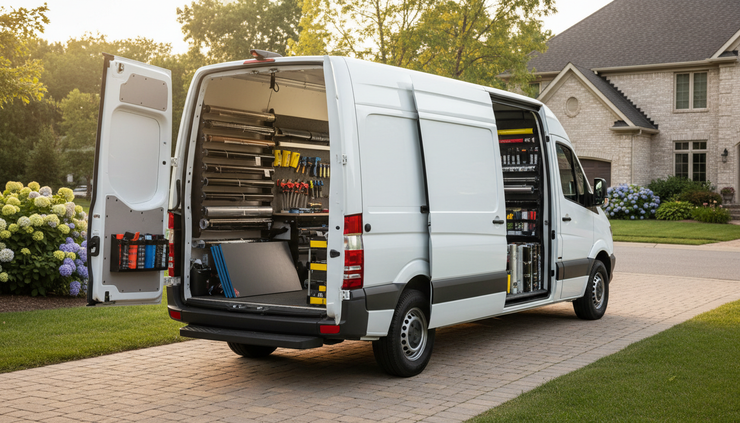
Mobile tinting is not just someone showing up with a roll of film and a spray bottle. A professional mobile setup works like a compact tint shop on wheels.
Installers may bring:
Film rolls and sample cards
These help clients compare shades, finishes, and privacy levels.
Portable cutting tools
Precision blades, straight edges, cutting boards, and plotter-cut film patterns help create accurate fits.
Heat guns
These help shape automotive film to curved rear windows and tight contours.
Tint squeegees and hard cards
Different tools help remove solution, press edges, and finish corners cleanly.
Sprayers with mounting solution
The solution allows the film to be positioned before final squeegee work.
Cleaning tools
Scrapers, lint-free towels, glass-safe cleaners, and detail tools help prepare the surface.
Lighting
Portable work lights help installers inspect edges, dust, bubbles, and finish quality.
Drop cloths and surface protection
These protect floors, trim, vehicle interiors, and nearby materials during the job.
Some teams also use pre-cut patterns for common vehicle models. Others combine digital patterns with hand trimming for the final fit. The best method depends on the glass, the film, and the installer’s process.

Why workplace tinting can save an entire trip
Having a car tinted at work is one of the clearest examples of why mobile service makes sense.
Instead of doing this:
Drive to a tint shop.
Wait for check-in.
Arrange a ride or sit nearby.
Return when the vehicle is ready.
Drive back to work or home.
The process becomes this:
Park in the agreed location.
Meet the installer or provide access.
Continue the day.
Review the finished tint when the work is complete.
For busy households, the same idea applies at home. A mobile installer can tint a vehicle in the driveway while other tasks continue. For a small business, several vehicles can be scheduled at the same site, which reduces downtime for staff and keeps the process simple.
Property managers can also benefit. If several units or shared spaces need window film, mobile service can handle the work on-site without moving glass or coordinating multiple off-site appointments.
What satisfied customers often notice first
The strongest feedback after mobile tinting usually comes down to convenience and comfort. People expect the tint to look good. What often surprises them is how easy the appointment feels.
One homeowner who had sun-facing windows tinted described the result as a relief during the brightest part of the afternoon. The room stayed usable without closing the curtains all day, and the film preserved the open feeling of the space.
A commuter who scheduled vehicle tinting at a workplace appreciated not losing a Saturday to the appointment. The car stayed parked during the workday, and the finished tint was ready before the drive home.
A small shop owner used frosted film on interior glass to add privacy without building permanent partitions. The work happened on-site, and the space looked more refined the same day.
A property manager arranged tinting for several problem windows in a shared building. Because the installer came to the property, the manager avoided coordinating transport, extra access trips, or separate service calls for each area.
These stories point to the same lesson: mobile tinting works because it removes friction. The benefits are not only in the film. They are in the way the service fits into real schedules.
How to prepare for a mobile tint appointment
A little preparation helps the installer work faster and deliver a better finish.
For vehicle tinting:
Park in a clean, accessible area.
Remove personal items from the doors, seats, and rear deck.
Make sure the installer has room to open doors fully.
Choose shade or covered parking when possible.
Ask about window roll-down timing after installation.
For home or commercial tinting:
Clear furniture and decor near the windows.
Remove curtains or blinds if requested.
Keep pets away from the work area.
Share any concerns about glare, privacy, or heat before film is selected.
Ask how long the film will take to dry fully.
For workplace appointments, it helps to confirm parking rules and building access ahead of time. If the installer needs water, power, loading access, or after-hours entry, that should be settled before the appointment date.

Is mobile tinting right for your home or office?
Mobile tinting makes sense when convenience matters, but it also needs the right conditions. A trained installer can help decide whether the location is suitable. The best results come from clean glass, controlled dust, safe access, and enough space to work.
For homes, mobile tint can make bright rooms more comfortable while adding privacy where it is needed. For offices and commercial properties, it can improve daily comfort, reduce glare, and give glass a more finished look. For vehicles, it can turn an errand into something that happens while the day continues.
The main thing is to choose a provider that explains film options clearly, follows local tint laws, uses quality materials, and gives care instructions after installation. Ask what films are available, what warranty applies, how long the job may take, and what the site needs before the installer arrives.
Mobile tint services are not just about bringing tools to a driveway or property. They are about giving people back the time they would have spent driving, waiting, and rearranging plans.
If tinting has been sitting on the to-do list because the appointment feels inconvenient, mobile service may be the simplest way to get it done. Pick the windows that cause the most glare, heat, or privacy concerns, ask for film recommendations, and schedule the work where life is already happening.


Comments