
Premium Ceramic Tint Specs -Atlanta 98 IR Rejection Luxury Pricing for EVs and Luxury Cars

Atlanta heat does not ask what you drive before it turns the cabin into a greenhouse. A Tesla glass roof, a Porsche interior with fine leather, a Rivian parked outside a private garage, or an executive sedan sitting in Buckhead traffic can all suffer from the same problem: intense infrared heat, UV exposure, and wasted cabin energy.
That is where premium ceramic film separates itself from basic tint.
For drivers comparing premium ceramic tint Atlanta options, the goal is not simply a darker window. The goal is thermal comfort, clean appearance, legal shade options, interior preservation, and installation quality that matches the vehicle. UniCres Tints, based in Union City, provides mobile window tinting across Atlanta’s premium residential areas, including Buckhead, Alpharetta, Milton, Johns Creek, South Fulton, Tyrone, and surrounding Fulton County communities.
This guide breaks down the performance specs, 2026 luxury pricing, EV advantages, and what to expect from a white-glove mobile tint appointment.
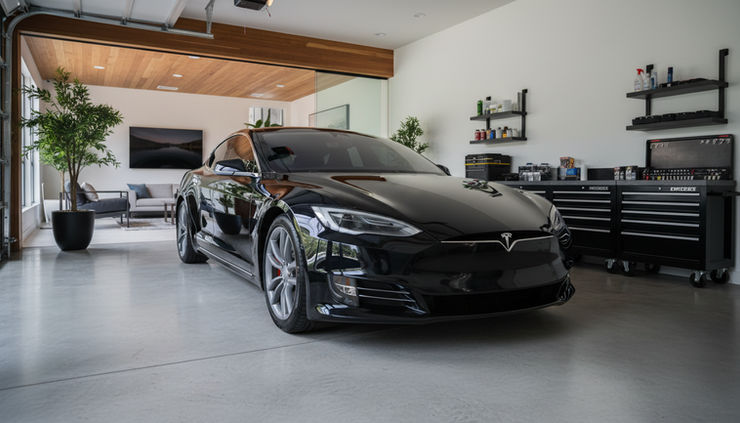
Premium ceramic tint is built for heat, not just shade
Traditional dyed tint mainly changes the appearance of the glass. It can reduce glare and add privacy, but it usually does less to control the heat drivers feel on their arm, face, and legs during summer driving.
Premium ceramic window film works differently. It uses advanced ceramic particles to reject infrared energy while maintaining optical clarity. That matters because a film can look relatively light and still block a serious amount of heat.
For executive and luxury vehicles, this is the difference between “the car looks tinted” and “the cabin feels controlled.”
A high-grade ceramic film helps with:
Lower cabin heat during daily driving
Reduced strain on air conditioning
Cleaner visibility than many low-grade dark films
Protection for leather, stitching, trim, screens, and plastics
More comfort in legal shade ranges
A refined, factory-like appearance
This is especially relevant in Atlanta, where a vehicle can sit under direct sun before a dinner in Buckhead, a golf day in Milton, a meeting in Alpharetta, or a weekend drive through North Fulton.
Darkness alone is not the premium feature. Heat rejection is the premium feature.
The key performance specs that matter
Premium ceramic film should be judged by measurable performance, not vague claims. The main numbers to look at are infrared rejection, TSER, UV rejection, and visible light transmission.
UniCres Tints offers ceramic performance designed for Georgia heat, with numbers that luxury and EV owners should pay attention to.
Performance category | Spec | Why it matters |
Infrared rejection | 98.1% IR rejection across 780 to 2500nm | Targets a wide range of heat-producing infrared energy |
Focused infrared rejection | 97% IR rejection across 900 to 1000nm | Measures heat rejection in a common testing range |
Total Solar Energy Rejected | Up to 72% TSER | Shows broad solar heat control, not only one infrared band |
TSER at a legal-style shade | 60% TSER at 35% shade | Delivers strong heat performance without needing limo-dark glass |
Ultraviolet rejection | More than 99% UV | Helps protect occupants and interior materials from UV exposure |
The strongest ceramic tint is not always the darkest film. The better measure is how much solar energy it rejects while keeping the vehicle elegant, visible, and compliant.
IR rejection measures targeted heat control
Infrared radiation is a major source of the heat felt through automotive glass. A film rated at 98.1% IR rejection from 780 to 2500nm is targeting a broad infrared range, not only a narrow marketing window.
That broader range matters in a luxury vehicle because the driver expects balanced comfort across the cabin, not a small improvement under specific test conditions.
TSER gives a fuller picture
TSER stands for Total Solar Energy Rejected. It accounts for the total amount of solar energy the film keeps out. A film with up to 72% TSER is performing at a high level because it addresses more than one heat pathway.
The practical detail is even more useful: 60% TSER at 35% shade. For many drivers, 35% gives a refined, legal-leaning look without turning the car into a blackout build. That makes ceramic film a strong fit for understated luxury.
UV rejection protects expensive interiors
More than 99% UV rejection helps protect the materials that make high-end vehicles feel high-end. Atlanta sun can be hard on:
Nappa leather and semi-aniline leather
Alcantara and suede-like trims
Carbon fiber trim
Wood veneers
Dash panels
Touchscreens and digital clusters
Stitching and seat bolsters
Ceramic tint does not make an interior invincible, but it helps slow the wear caused by ongoing solar exposure.

Why ceramic tint is a smart upgrade for EVs
EV cabins often have large glass areas. Tesla, Rivian, Porsche, Mercedes-Benz, BMW, and Lucid models can use expansive windshields, panoramic roofs, and broad side glass to create an open cabin feel. The downside is solar load.
When heat builds inside an EV, the climate system works harder to cool the cabin. That can draw energy from the battery. The exact range effect varies by vehicle, weather, parking conditions, and driving habits, but the principle is simple: less cabin heat means less cooling demand.
Premium ceramic tint can support EV comfort in three ways.
It helps control heat through large glass areas
A Tesla Model Y, Rivian R1S, or Porsche Taycan can feel hot even with the air conditioning running because the glass lets in radiant heat. Ceramic film reduces that radiant load, especially on side and rear glass.
It supports preconditioning efficiency
Many EV owners precondition the cabin before leaving. If the vehicle starts from a lower heat load, the climate system has less work to do. This can make the cabin feel ready sooner and reduce the constant battle against solar gain.
It preserves a clean EV aesthetic
Luxury EV owners often want performance without a heavily modified look. A lighter ceramic film can deliver serious heat rejection while keeping the vehicle refined. That is why legal-shade ceramic film is popular for premium EV applications.
For searches such as luxury car tint Buckhead, Tesla tint Alpharetta, high heat rejection tint Milton, UniCres Tints offers mobile ceramic installations designed around high-value vehicles and private-property convenience.
2026 premium ceramic tint pricing
Premium installations should be priced clearly. Luxury vehicle owners do not need vague quotes or surprise add-ons. UniCres Tints’ 2026 ceramic tint pricing is structured by vehicle type, with options for partial coverage and windshield service.
These prices reflect the value of high-performance ceramic film, mobile service, and installation care. A modern luxury vehicle is not the place for rushed prep, uneven edges, contaminated film, or low-grade tint that turns purple or hazy over time.
For more detail, see the full UniCres Tints 2026 pricing guide.
Coupe pricing
Coupes often include longer doors and frameless glass, which require careful handling. For Porsche 911, BMW 8 Series, Mercedes CLE, Lexus LC, and similar vehicles, the coupe package starts at $475.
Explore coupe tint packages.
Sedan pricing
Executive sedans and performance sedans benefit from ceramic tint because the cabin is used daily. BMW 5 Series and 7 Series, Mercedes E-Class and S-Class, Tesla Model 3, Porsche Taycan, Audi A6 and A8, and Lexus LS models are strong candidates.
Sedans are priced at $525.
View sedan tint packages.
SUV and truck pricing
Luxury SUVs and trucks have more glass, which means more surface area for heat to enter. Range Rover, Escalade, G-Wagon, Cayenne, X7, GLS, Rivian R1S, Tesla Model X, and premium pickups benefit from full-vehicle ceramic coverage.
SUVs and trucks are priced at $625.
See package options for SUV tint and truck tint.
2-door fronts and windshield service
Some owners already have rear factory privacy glass and want the front doors matched with higher-performing ceramic film. Front two-door service is priced at $225 to $250.
Windshield service is listed at $90. Windshield tint laws and visible light requirements can vary by placement and application, so UniCres can help match the service to the vehicle and Georgia requirements.
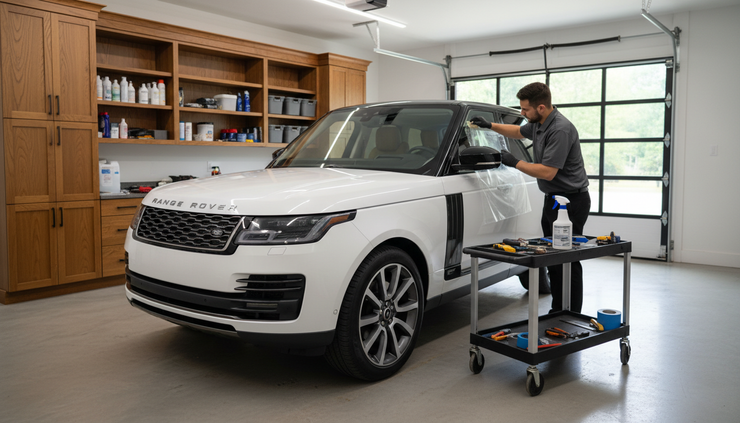
Legal shade can still deliver serious heat rejection
Some drivers assume they need very dark tint to get meaningful heat reduction. That is one of the most common mistakes in the tint market.
With basic film, darker may feel like the only upgrade. With high-grade ceramic film, the construction of the film does the real work. That is why 60% TSER at 35% shade matters. A 35% shade can maintain a polished look while still rejecting a large share of solar energy.
This is a strong fit for:
Executive sedans where a clean appearance matters
EVs with modern glass-heavy cabins
Luxury SUVs used for family and client transportation
Vehicles parked at private residences with strong afternoon sun
Owners who want comfort without an overly dark look
Georgia tint compliance depends on the vehicle, glass position, and current rules. A professional installer should guide shade selection before the film goes on the vehicle. The goal is to pair comfort, privacy, visibility, and compliance.
What white-glove mobile tint service includes
For many luxury owners, the installation experience matters as much as the film. UniCres Tints provides mobile window tinting from its Union City base to select Atlanta-area communities, including Buckhead, Alpharetta, Milton, Johns Creek, South Fulton, Tyrone, and surrounding areas.
The best setting is often a private garage or estate with clean lighting, safe access, and room to work. This keeps the vehicle off busy shop lots and lets the installation fit into the owner’s schedule.
A white-glove mobile appointment focuses on:
Clean work conditions before film is applied
Careful protection of interior surfaces
Proper glass preparation
Film alignment and edge quality
Heat shaping where needed
Final inspection before delivery
Guidance on curing and aftercare
Ceramic film installation is technical. Dust control, blade control, water management, and panel protection all matter. This is especially true for vehicles with premium electronics, sensitive trim, frameless windows, soft-close doors, and intricate interior materials.
Choosing the right ceramic package for a luxury vehicle
The right package depends on the vehicle and how it is used. A daily-driven EV in Alpharetta may need maximum heat control on the sides and rear. An executive sedan in Buckhead may need a balanced shade that looks discreet outside a hotel, restaurant, or office tower. A large SUV in Milton may need full coverage to keep passengers comfortable in all rows.
Use these guidelines as a starting point.
Choose full-vehicle ceramic tint for maximum comfort
Full-vehicle tint is the strongest choice for most luxury cars and EVs. It controls side and rear solar load, improves cabin balance, and gives the vehicle a finished look.
This is the best option for:
Tesla Model 3, Model Y, Model S, and Model X
Rivian R1T and R1S
Porsche Taycan, Cayenne, Panamera, and 911
Range Rover and Defender
Mercedes S-Class, GLS, GLE, and G-Wagon
BMW X5, X7, 5 Series, 7 Series, and i-Series models
Cadillac Escalade and premium trucks
Choose front doors if the vehicle has factory privacy glass
Many SUVs and trucks come with darker rear privacy glass from the factory. That glass may provide privacy, but factory privacy glass often does not match the heat performance of ceramic film.
A 2-door front package can improve comfort for the driver and front passenger while creating a more even appearance.
Add windshield service for front-cabin comfort
The windshield is one of the largest glass surfaces on the vehicle. Because it faces direct sun during many drives, it can contribute heavily to cabin heat. A windshield service can help reduce glare and heat at the front of the cabin when applied within the appropriate legal and visibility limits.
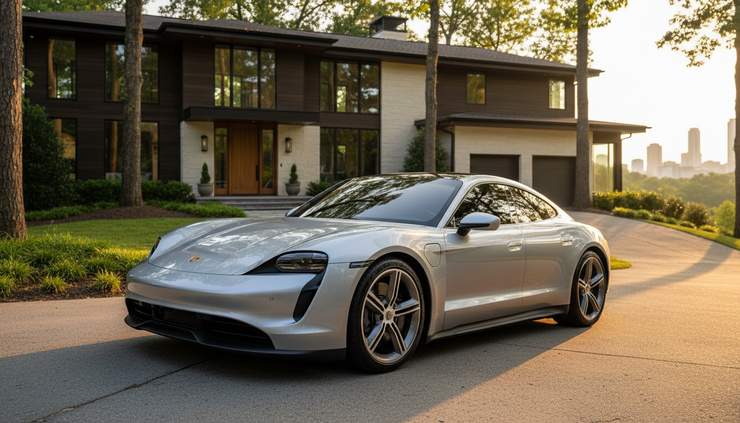
Aftercare keeps the finish clean
Premium film needs a short curing period. During that time, small moisture pockets or light haze can appear as the film dries. That is normal and should clear as the adhesive cures.
A few simple aftercare habits help protect the installation:
Wait before rolling windows down, based on installer guidance
Avoid picking at edges
Clean with tint-safe products
Use soft microfiber towels
Do not use ammonia-based cleaners
Give the film time to fully dry before judging clarity
Atlanta humidity and temperature can affect curing time. A professional installer will explain what to expect before leaving the appointment.
Premium tint should feel invisible once it is installed
The best ceramic tint upgrade is noticeable in comfort, but subtle in appearance. The cabin feels cooler. The leather looks protected. The glass has a smooth, even finish. The vehicle still looks like a luxury vehicle, not an afterthought.
That is the standard UniCres Tints works toward.
For owners who expect high heat rejection, legal-shade performance, and mobile service at a private garage or estate, premium ceramic film is one of the most practical upgrades available. The numbers support it: 98.1% IR rejection, 97% IR in the 900 to 1000nm range, up to 72% TSER, 60% TSER at 35% shade, and more than 99% UV rejection.
Review the package that matches your vehicle, then schedule a professional mobile installation through UniCres Tints online booking.


Comments