
Carbon vs Ceramic vs Premium Ceramic Which Tint Film Is Best for Your Car

Updated: Sep 7
A great tint job should do more than make a car look cleaner. The right film can reduce glare, protect the interior, block UV rays, and make summer driving feel less punishing. The wrong film can look fine on day one but leave you wishing you had chosen more heat rejection by the first long afternoon in traffic.
Carbon, ceramic, and premium ceramic films all improve comfort, but they are built for different needs. The best choice comes down to how much heat control you want, how often you drive, what kind of vehicle you own, and how long you plan to keep it.

The quick comparison
Here is the simple breakdown before getting into the details.
Film grade | Infrared rejection | Total solar energy rejected | UV protection | Best fit |
Entry-level to moderate | Standard protection | >99.9% | Drivers who want a sharper look and basic heat control | |
Up to 88% | High heat defense | >99.9% | Daily commuters dealing with hot weather and heavy traffic | |
Up to 98.1% | Up to 72%, with 60% at 35% legal shade | >99.9% | Luxury vehicle owners who want maximum comfort and interior protection |
The key difference is heat performance. Carbon films are a strong step up from basic dyed tint. Ceramic films are built for serious heat rejection. Premium ceramic films push that even further, especially for drivers who want comfort without going too dark.
What window tint performance numbers actually mean
Tint labels can get confusing because shops and manufacturers use terms like IR rejection, TSER, VLT, UV protection, and glare reduction. These numbers are related, but they do not mean the same thing.
Infrared rejection measures felt heat
Infrared radiation is a big part of the heat you feel through glass. A film with higher IR rejection can make sunlight feel less sharp on your arms, legs, and face while driving.
This number matters most if you park outside, drive during peak sun, or sit in slow traffic. If one side of your body feels hot even with the air conditioning on, IR rejection is one of the first specs to look at.
Ceramic and premium ceramic films usually perform much better here than carbon. Premium ceramic can reach up to 98.1% infrared rejection, which makes it the strongest choice in this comparison.
TSER measures total solar heat control
Total Solar Energy Rejected, or TSER, looks at how much total solar energy the film blocks. This includes more than infrared heat. TSER gives a broader picture of how much heat the film keeps out of the cabin.
Premium ceramic stands out here because it can reject up to 72% of total solar energy. At a 35% legal shade, it can still deliver around 60% TSER, which is a strong result for a film that remains reasonable for everyday street use in many areas.
Local laws vary, so legal darkness depends on the state and window location. Always check local tint rules before choosing a shade.
UV protection helps protect skin and interiors
All three categories in this comparison offer more than 99.9% UV protection. That is good news whether you choose carbon, ceramic, or premium ceramic.
UV protection helps slow fading, cracking, and discoloration on surfaces like leather, vinyl, plastic trim, and fabric. It also reduces UV exposure while driving. Tint should not replace sunscreen or other protection, but strong UV blocking is still one of the most practical benefits of quality film.
VLT controls how dark the tint looks
Visible Light Transmission, or VLT, tells you how much visible light passes through the film. A 35% tint allows more light through than a 20% tint, so it looks lighter.
Here is where many drivers make a mistake. They assume darker always means cooler. That is not always true. A high-grade ceramic film at a legal shade can outperform a darker entry-level film in heat rejection.
Film quality matters as much as darkness, and sometimes more.
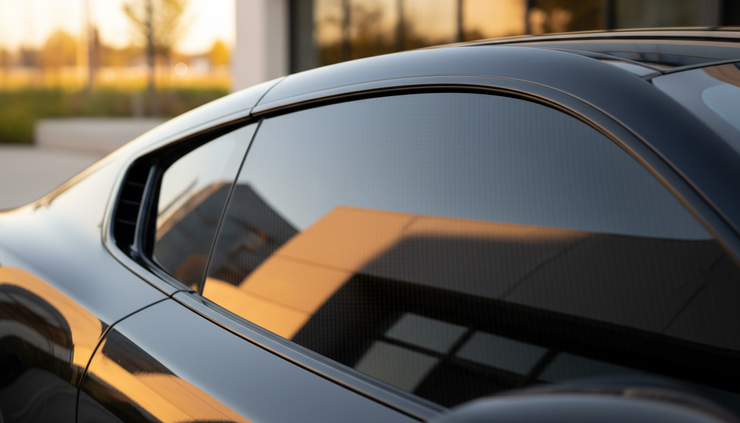
Carbon tint is best for style and basic comfort
Carbon tint is a smart entry point for drivers who want a cleaner appearance, better privacy, and moderate comfort without moving into higher-priced film grades.
Carbon film does not rely on metalized layers, so it usually avoids the signal interference concerns that older metallic films could create. It gives glass a richer look than basic dyed film and tends to hold its appearance better over time.
Carbon is a good match if:
The main goal is an upgraded exterior appearance
The car is used for short drives or mixed daily use
The budget matters more than maximum heat rejection
The vehicle already has decent air conditioning
Basic UV protection and glare reduction are enough
The tradeoff is heat performance. Carbon provides standard protection and can reduce the harshness of sunlight, but it will not match ceramic film when the cabin sits in summer heat.
That makes carbon a strong fit for drivers who say, “I want it to look good and feel a little better,” rather than, “I need the coolest cabin possible.”
Ceramic tint is best for most daily drivers
Ceramic tint is where heat rejection becomes a main feature, not just a bonus. It uses ceramic particles to block infrared heat while keeping the film non-metallic. That combination makes it a popular choice for modern vehicles with GPS, Bluetooth, satellite radio, keyless entry, and other electronic systems.
Ceramic film can reach up to 88% infrared rejection, depending on the exact product and shade. That is a major jump from entry-level films and a noticeable improvement during hot-weather driving.
For many cars, ceramic is the best balance of comfort, appearance, and value.
Why commuters notice the difference
Daily driving creates heat in ways that weekend driving does not. The cabin warms up during morning parking, cools down during the drive, then heats up again while the car sits. Add stop-and-go traffic, low airflow, direct sun, and long red lights, and the cabin can feel hot even when the AC is working hard.
Ceramic film helps by reducing the heat load before it fully enters the car. That can make the vehicle feel more comfortable faster after startup and more stable during longer drives.
This matters most for:
Commuters who drive during peak sunlight
Parents with children in the back seat
Drivers with black interiors
Rideshare and delivery drivers
Anyone parking outdoors most of the day
Ceramic tint is also a good choice for drivers who want performance but do not need the highest film grade available. It delivers serious improvement without always jumping to the premium tier.
Premium ceramic tint is best for maximum comfort
Premium ceramic is the top choice for drivers who want the strongest heat rejection, the best cabin comfort, and high performance at legal or moderate shades.
The main advantage is that premium ceramic can block more heat without forcing you into an extremely dark film. That matters for visibility, legal compliance, and a refined factory-like look.
Premium ceramic can provide up to 98.1% infrared rejection and up to 72% TSER. At a 35% legal shade, it can still reach about 60% TSER, giving it a major advantage for drivers who want heat control without making the car look overly dark.

Why premium ceramic makes sense on higher-end vehicles
Luxury vehicles often have larger glass areas, panoramic roofs, dark leather seats, and detailed interior finishes. These features look great, but they can trap and hold heat.
Premium ceramic helps protect that investment. It supports a cooler cabin, reduces UV exposure, and helps slow visible wear from sunlight. It also preserves a high-end look because the film can stay relatively light while still performing well.
It is the best choice if:
Interior comfort is the top priority
The car has leather, Alcantara, wood trim, or premium plastics
The vehicle spends many hours in direct sun
You want strong heat rejection at a legal shade
You plan to keep the car for several years
You want the best available performance rather than the lowest price
The drawback is cost. Premium ceramic usually sits at the top of the price range. For someone who drives short distances or parks in a garage most of the time, ceramic may be enough. For someone who feels heat through the glass every day, premium ceramic is often worth it.
Which tint film should you choose
The best choice depends on your driving life more than the badge on the box. Use the film grade to solve the real problem you have.
If your main goal is | Choose | Why it fits |
Better appearance on a budget | Carbon | It improves style, glare, and basic comfort |
Noticeable heat reduction for everyday driving | Ceramic | It offers strong IR rejection and all-around value |
Maximum comfort and top heat control | Premium ceramic | It delivers the highest IR and TSER performance |
A legal shade with serious heat defense | Premium ceramic | It performs well even without going very dark |
A practical upgrade for a commuter car | Ceramic | It balances comfort, price, and long-term use |
If you are comparing quotes for Atlanta Window Tinting, ask what film grade is being installed, not just what shade it is. A 35% carbon film and a 35% premium ceramic film may look similar from the sidewalk, but they will not feel the same when the sun is hitting the side glass.
The same rule applies to Mobile Window Tinting services. Convenience is helpful, but the film quality, installation skill, and warranty matter just as much.
Do not choose tint by darkness alone
Dark tint can reduce glare and improve privacy, but darkness does not tell the whole story. A darker low-grade film can still allow more heat into the cabin than a lighter ceramic or premium ceramic film.
This is especially important if you want to stay within legal limits. Many drivers assume they need very dark windows to get real heat control. Premium ceramic changes that equation because it can deliver high TSER and IR rejection at lighter shades.
A good tint decision should consider:
Heat rejection
Legal shade limits
Night visibility
UV protection
Interior style
Warranty quality
Installer skill
How long you plan to keep the vehicle
Night visibility deserves special attention. Very dark tint can make backing up, turning, and checking mirrors harder after sunset. If you do a lot of night driving, a lighter ceramic or premium ceramic film may be safer and more comfortable than a darker basic option.
Installation quality matters as much as film grade
Even the best film can disappoint if it is installed poorly. Dirt, bubbles, uneven edges, and peeling corners can ruin the look and shorten the life of the tint.
A clean installation should have smooth edges, consistent coverage, and no trapped debris. The film should be cut properly for each window and handled in a clean environment. Rear windows with defroster lines need careful work so the film lays flat without damaging the glass or electronics.

Ask these questions before booking:
What grade of film is included in the quote?
What are the IR rejection and TSER ratings?
Does the film block more than 99.9% UV?
What shade options are legal for the vehicle?
Is there a manufacturer warranty?
How long should the windows stay rolled up after installation?
What care instructions should be followed?
The answers tell you whether you are comparing similar products or just similar prices.
The best film for each type of driver
Carbon is the best pick for drivers who want a clean appearance, a more finished look, and basic heat control at an entry-level price. It is practical, attractive, and enough for many vehicles.
Ceramic is the best pick for most daily drivers. It offers a strong jump in heat rejection, excellent UV protection, and a comfortable cabin without moving into the highest price tier.
Premium ceramic is the best pick for drivers who want the highest comfort level. It makes the most sense for luxury vehicles, long commutes, hot climates, and anyone who wants excellent heat rejection while keeping a legal, refined shade.
If the car is mainly about style, carbon can do the job. If the car is part of daily life, ceramic is usually the smart middle ground. If comfort, protection, and performance matter most, premium ceramic is the clear winner.

The simplest way to choose is to start with the problem. For looks and light comfort, choose carbon. For daily heat defense, choose ceramic. For the coolest, most refined cabin, choose premium ceramic. That choice will matter every time the sun hits the glass.


Comments